
5 Paper Crafts That Become Counting and Sorting Games
· Craftiverse Editorial Team
Five fully illustrated paper craft tutorials with counting, sorting, and pattern games, plus easier and more involved variations and a printable play record.
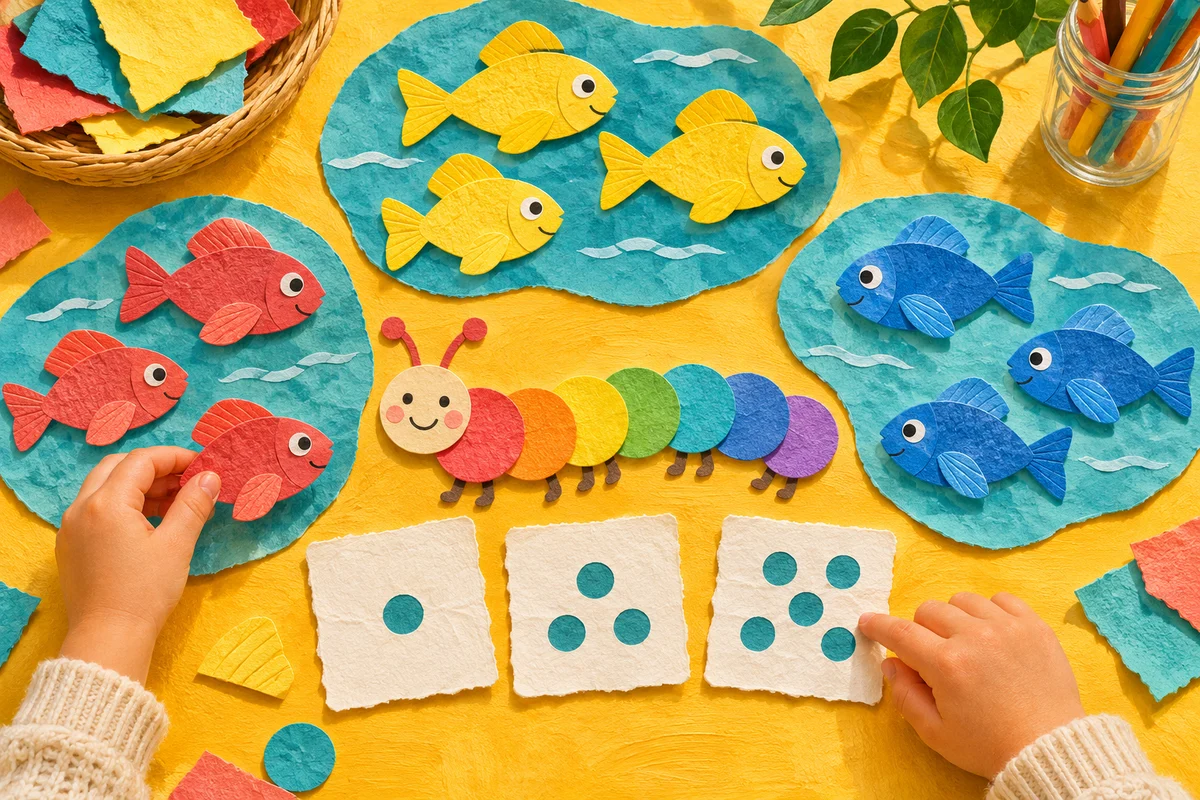
Illustration created for Craftiverse; the scene is illustrative.
Paper circle caterpillar
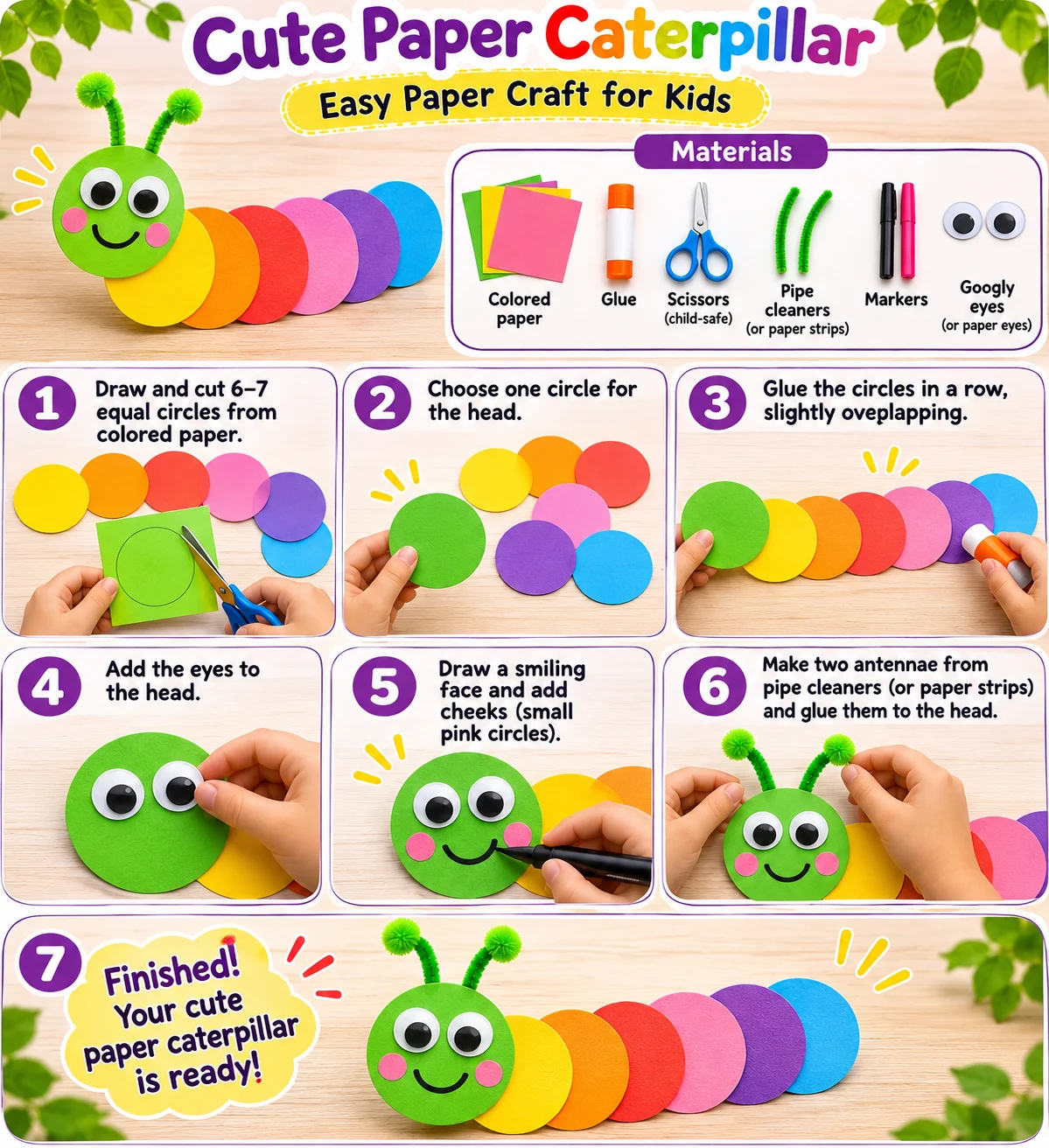
Materials
- Colored paper
- Scissors
- Glue
- Marker
- Paper eyes
How to make it
- Cut six or seven circles in different colors and another circle for the head.
- Overlap and glue the circles in a gently curved row.
- Add eyes and draw a smile on the head.
- Glue the head to the front and add paper antennae.
Colorful paper fish
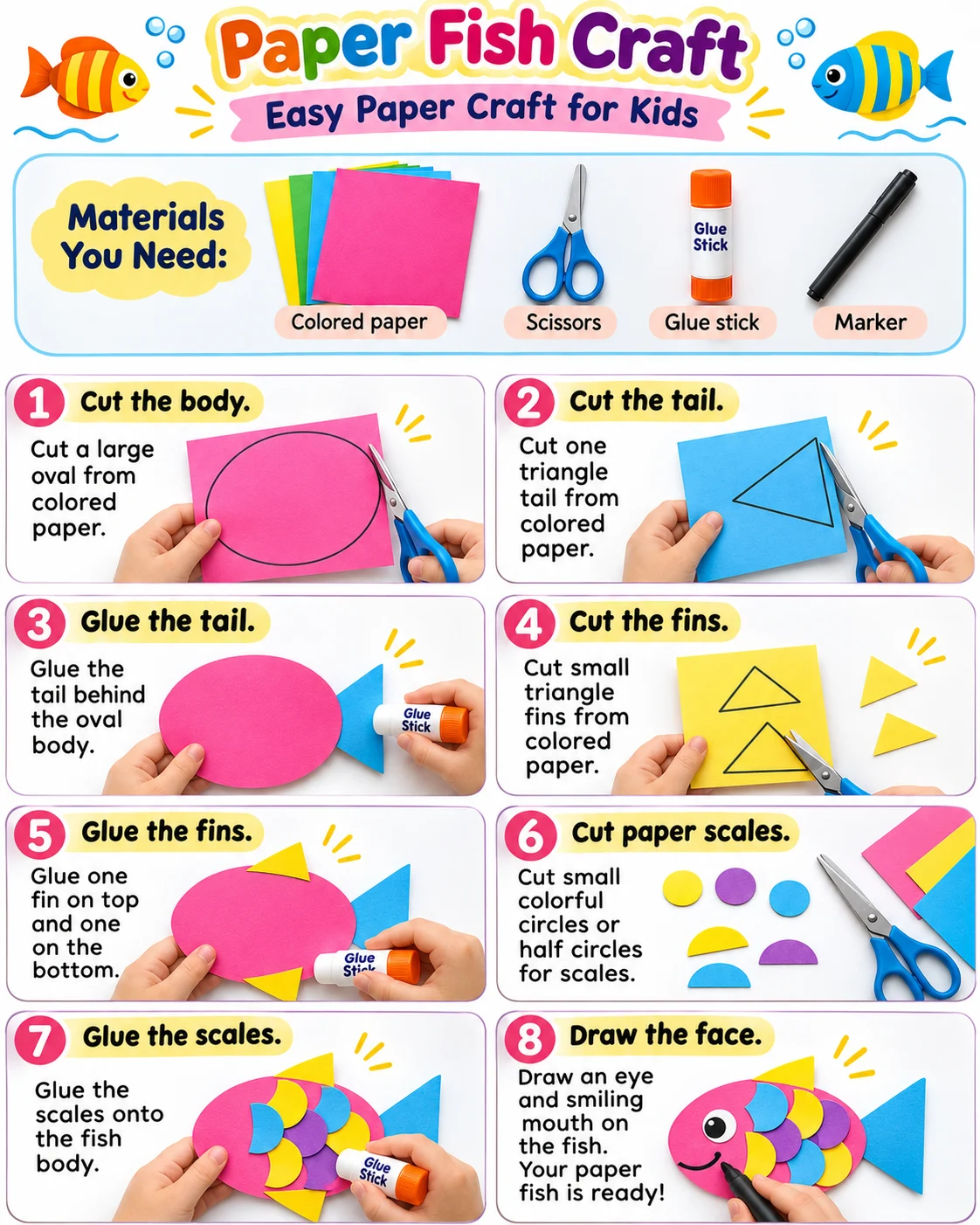
Materials
- Colored paper
- Scissors
- Glue
- Marker
How to make it
- Cut a large oval for the body and a triangle for the tail.
- Glue the tail behind the body and add two small fins.
- Cut colorful circles or semicircles and overlap them across the body to make scales.
- Add an eye and draw a mouth.
Rainbow paper chain
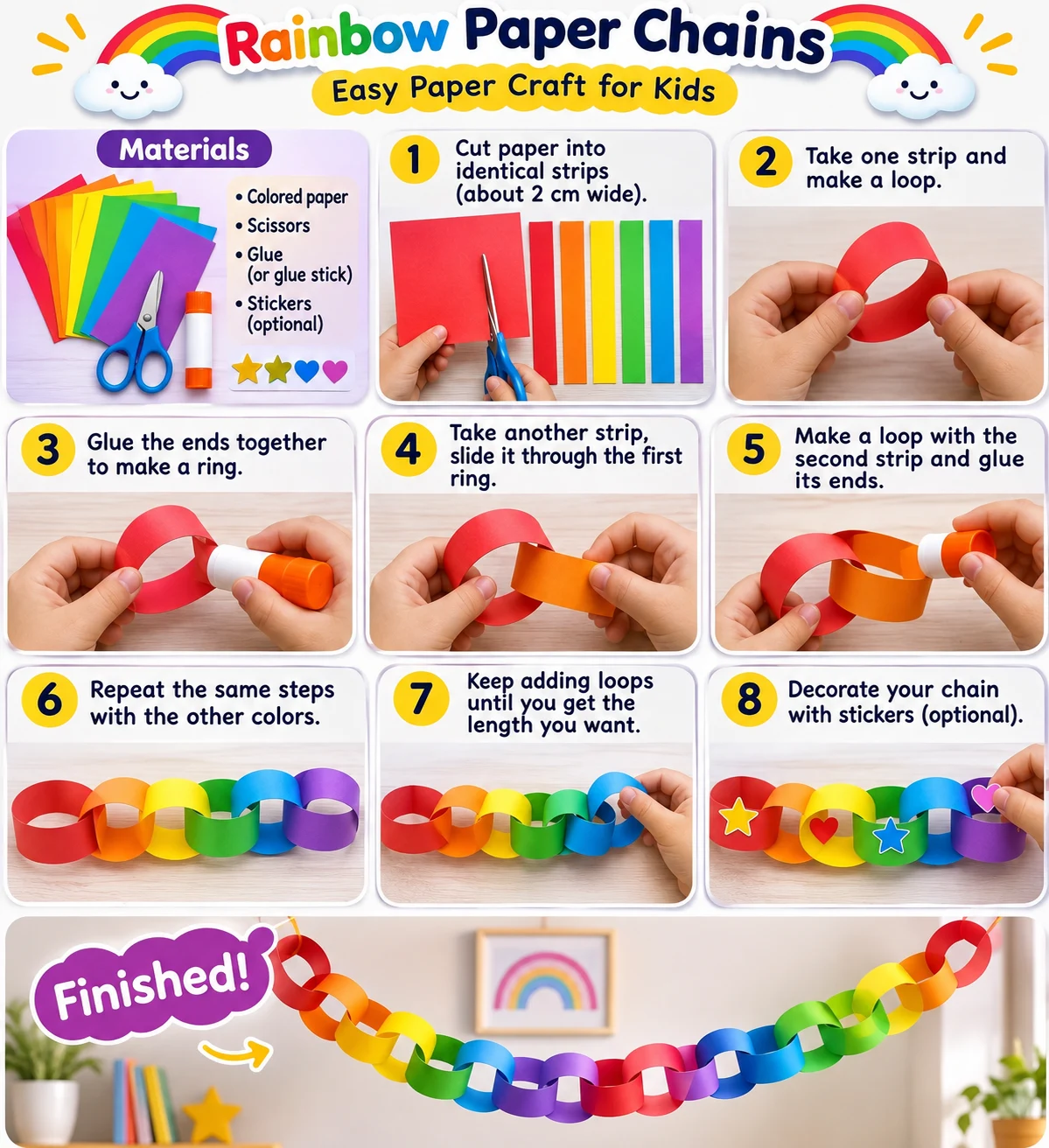
Materials
- Colored paper
- Scissors
- Glue stick or tape
How to make it
- Cut strips of the same width from several colors of paper.
- Make a loop with the first strip and secure the ends.
- Thread the next strip through that loop and close it. Repeat with alternating colors.
- Keep adding links until the chain is as long as you want.
Paper house collage
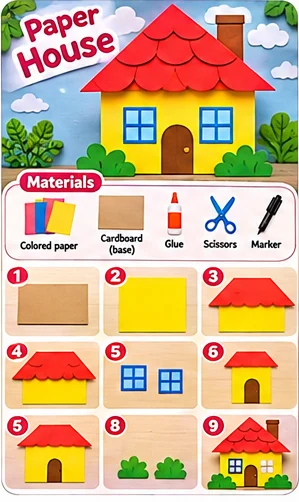
Materials
- Cardstock
- Colored paper
- Scissors
- Glue
- Marker
How to make it
- Cut a large rectangle for the wall and a triangle for the roof.
- Glue the shapes to cardstock and add a chimney.
- Cut a door and windows and glue them to the house.
- Add paper roof tiles, clouds and plants.
Looped paper butterfly
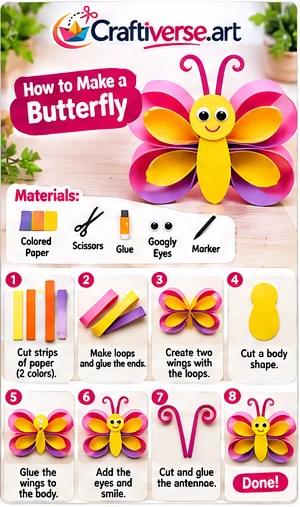
Materials
- Colored paper
- Scissors
- Glue
- Marker
How to make it
- Cut strips in two colors and glue the ends of each strip together into a loop.
- Nest a smaller loop inside a larger one to form each wing.
- Cut a paper body and glue two wings on either side.
- Add eyes, a smile and two curled antennae.
Use the craft as something to explore
The five tutorials above give you something to make, but the play can begin before the glue comes out. Movable pieces are useful for rearranging and comparing; you can keep some loose for the game and use a second set for a finished craft. Use large pieces where small parts are unsuitable and supervise scissors and adhesives.
NAEYC describes everyday math as broader than reciting numbers. These activities offer opportunities to notice groups, shapes, quantities, and patterns. They are not a curriculum or a way to judge whether a child is ahead or behind. Keep the starting set small enough that the game feels approachable.
Help counting connect to actual objects
If your child wants to count, move or touch one paper piece for each number word. After the last piece, you might say “That’s how many are here.” If a piece gets counted twice, spread the pieces apart or move counted pieces into another area rather than treating it as a test.
Let your child choose whether to count again. If they enjoy the colors more than the quantities, switch to matching or arranging. A quiet play session does not need a numerical target to be useful.
Let a sorting rule change
Start with an obvious choice such as two colors, then ask how your child would like to arrange the pieces. They may sort by size, decoration, or a story rule such as fish that live in the same pond. Ask them to show you rather than insisting there is only one correct grouping.
When changing the rule, put the pieces back together first so the new arrangement is clear. A fish can be small and blue at the same time; you can notice those overlapping features without introducing a worksheet.
Compare without rushing to symbols
Line two groups up in pairs to explore which has more, fewer, or the same. Use ordinary language and point to what you notice. You do not need written numerals, addition signs, or flashcards before the child wants them.
For someone who enjoys a challenge, invite a prediction, then check by moving pieces. For someone who finds that frustrating, return to matching one pair. The same material can support different ways of joining in.
Keep the play record optional
The printable has prompts for a grown-up to jot down, not a score chart for the child. Note a sorting rule they invented, a pattern they liked, or an idea they want to revisit. You can simply talk about those things instead of printing anything.
Avoid timing the games or comparing siblings’ totals. If a child asks you to play differently, follow the safe idea where practical. Learning through play still needs to feel like play.
Store the pieces for a second session
Keep only a manageable set in a labeled envelope or folder, stored out of reach where loose pieces are unsuitable for younger children. Put tools away separately. Save a few unglued shapes if your child wants to change the game later.
Next time, repeat a familiar invitation before adding another rule. A small change, such as a new paper pond or a different color sequence, can be enough; you do not need a new craft kit for every session.
Common questions
What age are these games for?
Choose according to the child’s interest, abilities, and safe use of materials. The variations are options, not age-based milestones.
Do we need number cards?
No. Start with moving, matching, and comparing paper pieces. Add written numerals only if useful to your child.
Should I correct every counting error?
You can model counting slowly or rearrange pieces if help is wanted. Keep the session exploratory rather than turning every attempt into a test.
Sources & editorial notes
The resources below inform the general approach. The activity instructions, sample words, and planning tables are original Craftiverse suggestions; they have not been clinically evaluated.
- NAEYC: 10 Things to Know About Math
Background on everyday counting, sorting, comparison, and patterns. The games below are original Craftiverse activity suggestions, not a developmental assessment.
- American Academy of Pediatrics: Choosing Safe Art & Craft Supplies
Background on choosing suitable craft materials. Project quantities, timing examples, and adaptations are Craftiverse planning suggestions.
Written by the Craftiverse Editorial Team · Published 21 November 2026. This article has not been reviewed by a clinician. Read our about page or contact us about a correction.
Turn paper animals into stories, too