
7 Ways to Encourage Creativity Without Buying More Toys
· Craftiverse Editorial Team
Seven practical ways to make more room for creative play using what you own, plus a one-week plan and simple prompts for everyday materials.
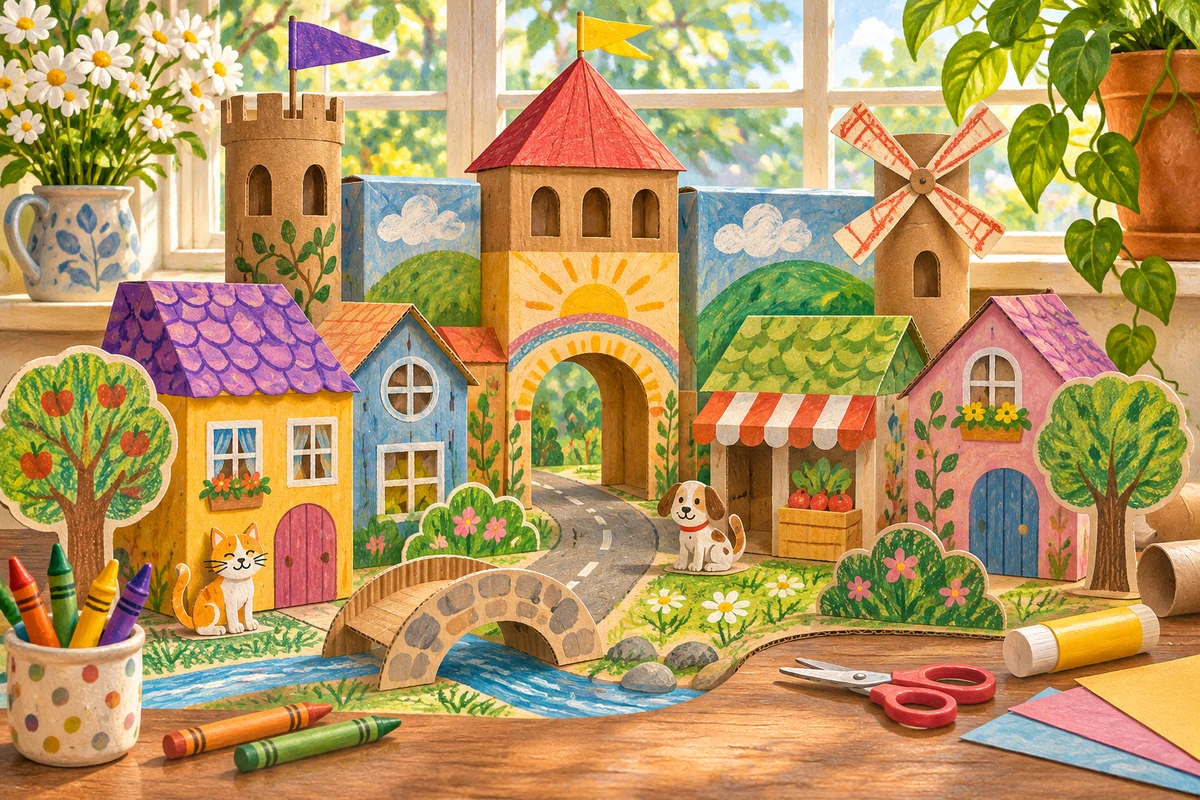
Illustration created for Craftiverse; the scene is illustrative.
1. Put out fewer things at once
Choose a manageable set: paper, crayons, and a clean cardboard box, for example. Keep the rest nearby but out of the working space. A small selection makes setup and tidying easier for you; it is not a rule that every child must play with only three things.
Offer a choice of what to start with. If the box becomes a pretend shop rather than your planned castle, follow that idea when it is safe and practical.
2. Give materials a second job
A clean cereal box might become a building, a backdrop, or a pretend delivery parcel. Invite your child to choose one job, draw the details, and try playing with it before adding more. Remove staples, sharp edges, packaging film, and unsuitable small parts first.
If you have no box, fold a sheet of paper into a tent and make it a house. You do not need to collect piles of recycling; keep only clean, useful pieces you have room to store.
3. Ask one question, then leave room for the answer
Try “How could it stand up?” or “What would your character need next?” Give your child time to show you, rather than asking a string of questions. They might answer by moving a piece instead of speaking.
If they ask you to decide everything, offer two starting points: “A shop or a garage?” Once they choose, hand back a small decision such as the door color.
4. Leave space for changes and mistakes
Test pieces before gluing. A paper roof that falls can be an invitation to try a fold or a wider base. Ask whether they want help; do not make every accident into a teaching moment.
You can model a small revision on your own work: “Mine tips over. I’ll try a wider foot.” Avoid pretending a task is easy when your child is finding it difficult.
5. Use everyday stories as starting points
Invent a tiny character who needs to get home, open a café, or find a lost scarf. Make one prop from paper, then tell or act out the story. Your child can narrate, draw, arrange, or play a character.
For a child who likes clear instructions, start with an illustrated craft they choose, then offer an optional change: different colors, a new name, or a home for the finished character. Following a guide and inventing freely can both belong in your week.
6. Revisit a material instead of replacing it
Keep a small unfinished project on a tray if your space allows. Next time ask “Keep going, change it, or start again?” A repeated material can support a completely different idea; novelty does not have to mean a purchase.
If the project has been ignored, let your child choose what to keep before recycling it. A small folder or one display spot sets a practical limit without demanding that every creation be saved.
7. Make alongside your child sometimes
Use your own paper or materials. Show that adults can sketch, change their minds, and make ordinary-looking things for enjoyment. Let your child lead their own project instead of correcting theirs to match yours.
You do not need to entertain throughout the activity. A short shared start, followed by safe nearby play, may fit your day better. Supervision depends on the materials and your child’s needs.
A seven-day plan using the same small supply basket
| Day | Invitation | Optional extension |
|---|---|---|
| Monday | Turn paper marks into creatures. | Give one a name. |
| Tuesday | Build a home from a clean box. | Draw a map around it. |
| Wednesday | Invent a paper-bag character. | Act out a short conversation. |
| Thursday | Make a paper bridge. | Change its fold and test again. |
| Friday | Create a pretend café menu. | Use pictures instead of words. |
| Saturday | Combine two things you made. | Invent a shared story. |
| Sunday | Choose what to keep and reuse. | Let your child suggest next week’s idea. |
What this approach does—and does not—promise
These invitations create opportunities to explore. They do not guarantee particular academic results, prevent boredom, or replace support your child may need. Notice what interests your child and adapt the next invitation from there.
NAEYC describes open-ended art as exploration without a prescribed finished product. Our home suggestions apply that idea in small, practical ways; you can still enjoy kits and guided projects when they suit your family.
Common questions
Do children need specialist craft supplies?
Many activities can start with paper, crayons, and clean cardboard. Check each project’s actual materials and safety needs before starting.
What if my child wants instructions?
Offer a short guide they choose. Leave optional decisions such as colors and decoration open rather than requiring free invention.
Should I buy something if they get bored?
You can first change the invitation, revisit familiar materials, or allow unstructured time. A purchase is a household choice, not a requirement for creative play.
Sources & editorial notes
The resources below inform the general approach. The activity instructions, sample words, and planning tables are original Craftiverse suggestions; they have not been clinically evaluated.
- NAEYC: Supporting the Development of Creativity
Background on open-ended art and exploring materials. The activity plans and example conversations here are Craftiverse suggestions.
Written by the Craftiverse Editorial Team · Published 21 November 2026. This article has not been reviewed by a clinician. Read our about page or contact us about a correction.
Find a project using everyday supplies