
How to Host a Kids’ Craft Playdate Without Getting Overwhelmed
· Craftiverse Editorial Team
A manageable home playdate plan with two fully illustrated craft options, shared-tool guidance, early-finisher ideas, and a free setup and cleanup checklist.
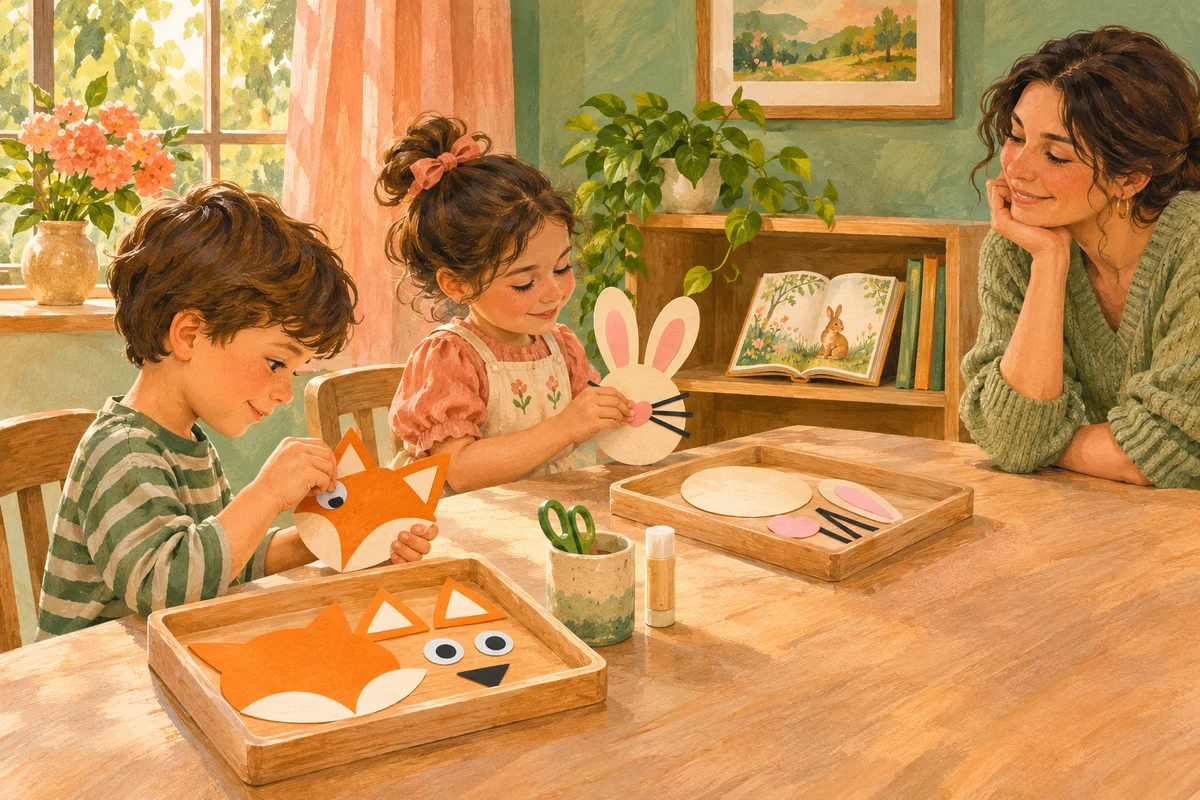
Illustration created for Craftiverse; the scene is illustrative.
Colorful paper fish
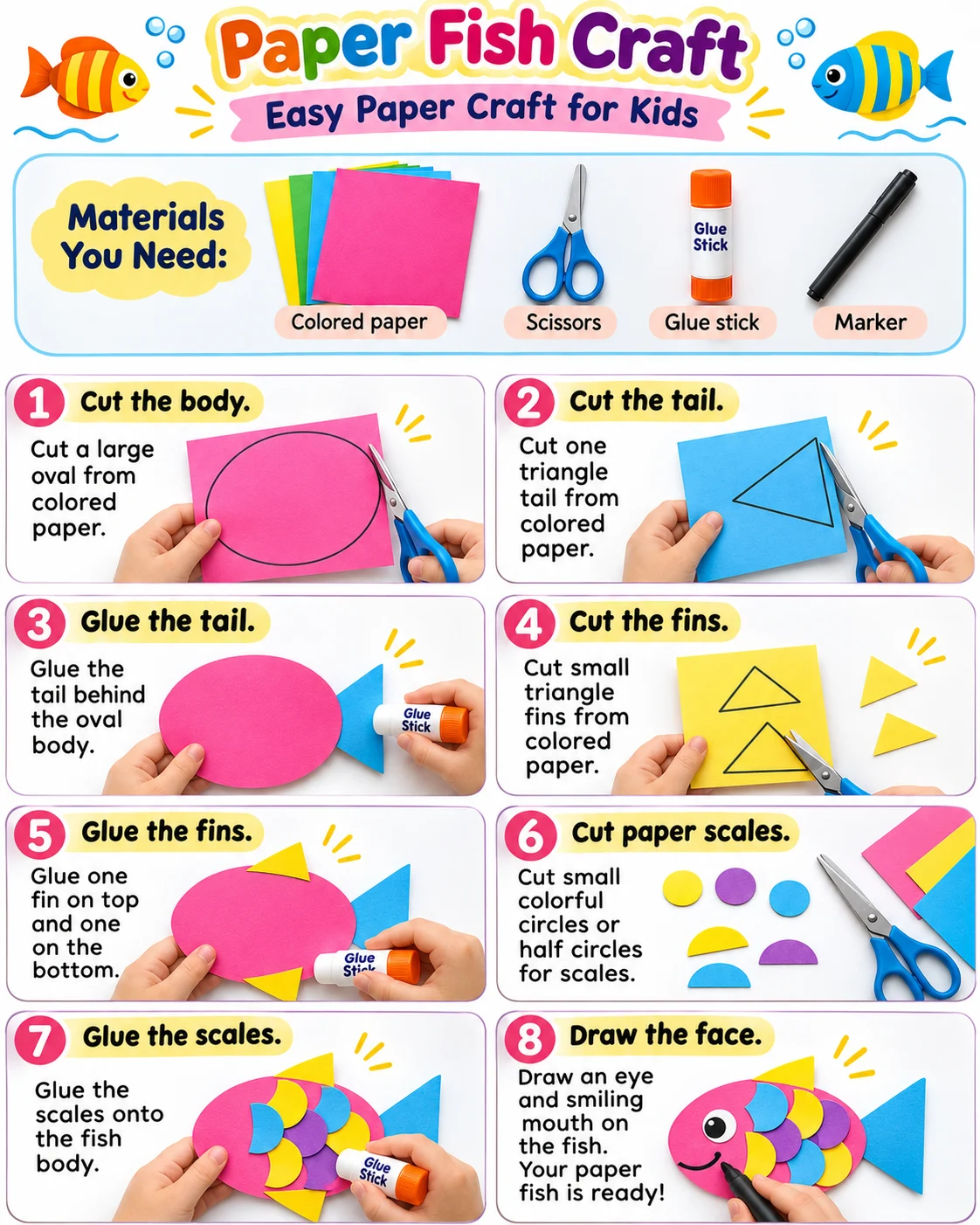
Materials
- Colored paper
- Scissors
- Glue
- Marker
How to make it
- Cut a large oval for the body and a triangle for the tail.
- Glue the tail behind the body and add two small fins.
- Cut colorful circles or semicircles and overlap them across the body to make scales.
- Add an eye and draw a mouth.
Paper circle caterpillar
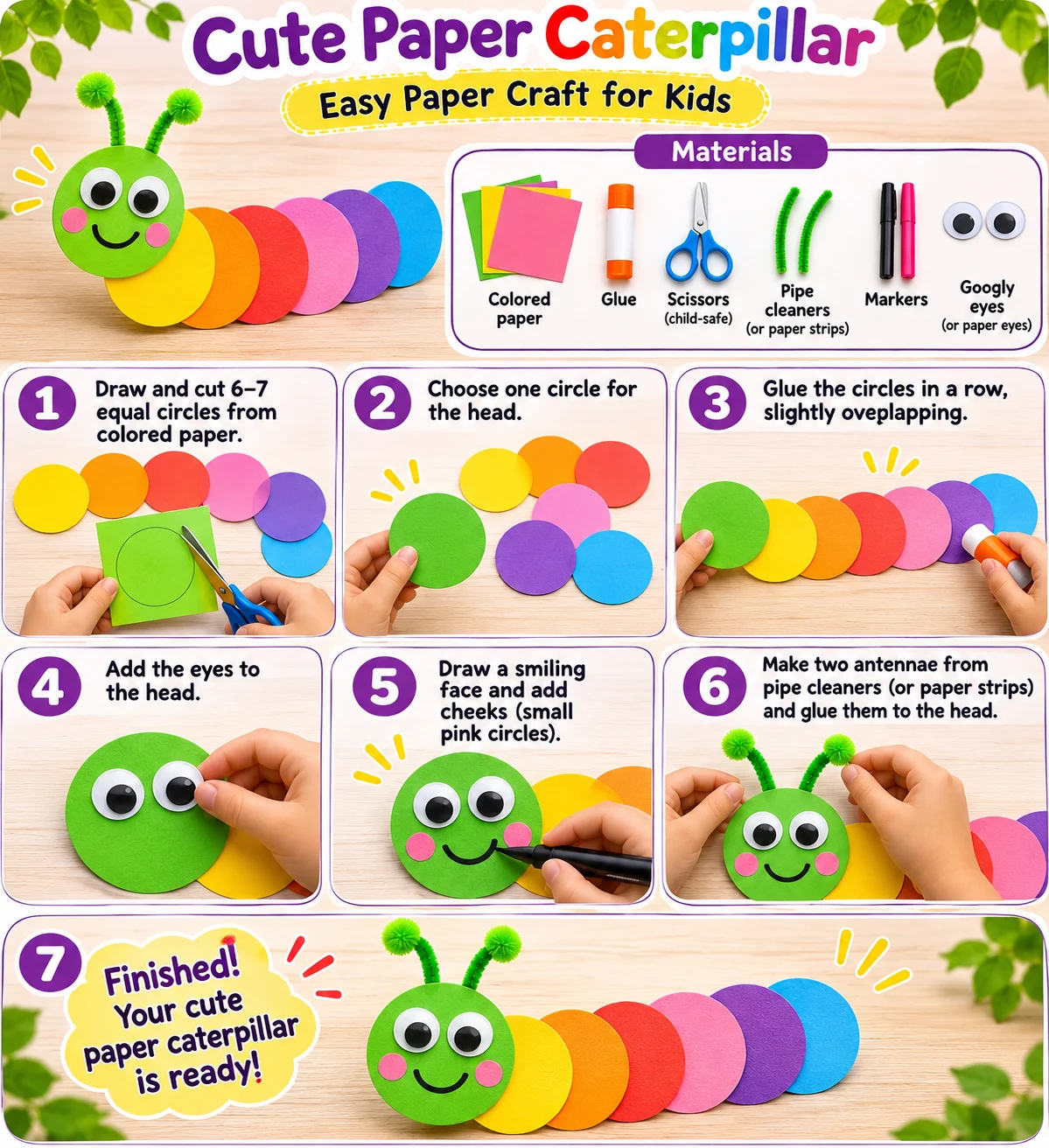
Materials
- Colored paper
- Scissors
- Glue
- Marker
- Paper eyes
How to make it
- Cut six or seven circles in different colors and another circle for the head.
- Overlap and glue the circles in a gently curved row.
- Add eyes and draw a smile on the head.
- Glue the head to the front and add paper antennae.
Keep the invitation smaller than the whole playdate
A craft can be one part of a visit rather than its central obligation. Offer a choice between the two tutorials above, or pick just one if that is easier for you. Let caregivers know what materials and tools will be used, and ask about practical support needs before the visit.
Do a quick trial with the supplies you plan to offer. If every step needs adult hands, prepare more pieces in advance or choose the flatter project. Your own comfort with supervision and the children attending matters more than how impressive the example looks.
A modest shared supply plan
For each child, set aside one background sheet, a few large prepared shapes, and access to suitable crayons. Add spare paper rather than another complete craft kit. The fish needs an oval, a tail, and fins; the caterpillar needs several circles and a head. Choose a size that children can handle comfortably.
Place glue sticks where you can supervise their use and keep scissors with the adult or at a clearly supervised station as appropriate. Shared supplies can be passed one at a time. Do not use a fixed number of tools as a substitute for deciding what level of support is safe.
One possible flow for a visit
| Part of the visit | What to offer | A flexible alternative |
|---|---|---|
| Arrival | Familiar toys, a book, or free drawing while settling. | Skip the craft if the group is already happily playing. |
| Invitation | Show two simple examples and let children choose. | Read the options without showing a finished model. |
| Making | Give one useful step at a time and help when invited. | Offer prepared pieces or drawn details. |
| Finishing | A background picture, short story, or quiet play. | Save unfinished pieces to take home. |
| Before departure | Collect named work and tidy one category at a time. | Adults manage tools while children collect large paper scraps. |
Agree on what belongs to whom
Give each child a tray, paper mat, or defined part of the table. Ask before borrowing someone’s pieces or changing their work. Mark a drying sheet with a name when needed, keeping the activity separate from online sharing or photo collection.
If two children want the same material, offer another piece or a clear turn rather than asking one to give up their project. A guest can choose a different color or construction. Matching results are not the measure of a successful visit.
Prepare for different finishing times
A child who finishes early can draw a setting, look at a book, or move to another agreed safe activity. They do not have to become the helper. A child still working can stop when they want and take safe unfinished pieces with them.
If a child becomes upset, pause the tool use and help them settle before discussing a repair. You can make the task simpler or put it away. Avoid comparing children’s skill or turning a casual visit into a lesson about who perseveres longest.
Check the adult plan
Decide who supervises if someone needs the bathroom, a drink, or help with a material. Keep snacks separate from crafts and check relevant food needs with caregivers if offering them. Younger siblings who can reach the table change which loose pieces are suitable.
A small guest list does not automatically make an activity safe without attention. If your responsibilities pull you away from the table, pause the craft and put tools somewhere secure. It is fine to return to familiar play for the rest of the visit.
A cleanup that is easy to explain
Give one concrete job at a time: put crayons in the cup, collect large scraps, then move finished work. Adults handle tools and anything unsuitable for children to pick up. Keep wet or fragile crafts separate while glue sets.
After the visit, save only a manageable amount of reusable paper. Note which invitation was easiest to start and which preparation you would change. The printable checklist is there to reduce remembering, not to add another standard your home has to meet.
Common questions
Should both children make the same thing?
They can, but do not have to. Fish and caterpillars use overlapping supplies while allowing different choices.
How long should the craft session last?
Follow interest and the supervision available. Begin with a small invitation and allow children to stop or save their work.
What if one child does not want to craft?
Offer familiar play or a quiet alternative in an agreed safe place. Participation should be optional.
Sources & editorial notes
The resources below inform the general approach. The activity instructions, sample words, and planning tables are original Craftiverse suggestions; they have not been clinically evaluated.
- American Academy of Pediatrics: Choosing Safe Art & Craft Supplies
Background on choosing suitable craft materials. Project quantities, timing examples, and adaptations are Craftiverse planning suggestions.
Written by the Craftiverse Editorial Team · Published 21 November 2026. This article has not been reviewed by a clinician. Read our about page or contact us about a correction.